You can use the traditional autocomplete provided by Algolia or Elasticsearch. Like other traditional autocomplete systems, they predict the next keyword using indexed content and historical searches.
In contrast, AI Autocomplete helps users complete the full request based on their real-time intent and what the product can do.
The good news is that you can use AI Autocomplete with your existing Algolia or Elasticsearch backend. AI Autocomplete simply gives your search engine a much richer query.
AI Autocomplete completes the request before submit. Algolia or Elasticsearch retrieves and ranks the results after submit.
The core difference
Algolia and Elasticsearch provide a traditional form of autocomplete. Traditional autocomplete predicts the next keyword:
"run" → "running shoes"
AI Autocomplete helps the user complete the full request:
"running shoes" → "women's waterproof trail shoes, size 8, under $150"
That is the core difference. Algolia or Elasticsearch autocomplete predicts what the user may type next. AI Autocomplete predicts what the user may want to do and helps them complete it.
Traditional autocomplete completes keywords. AI Autocomplete completes requests.
How they work
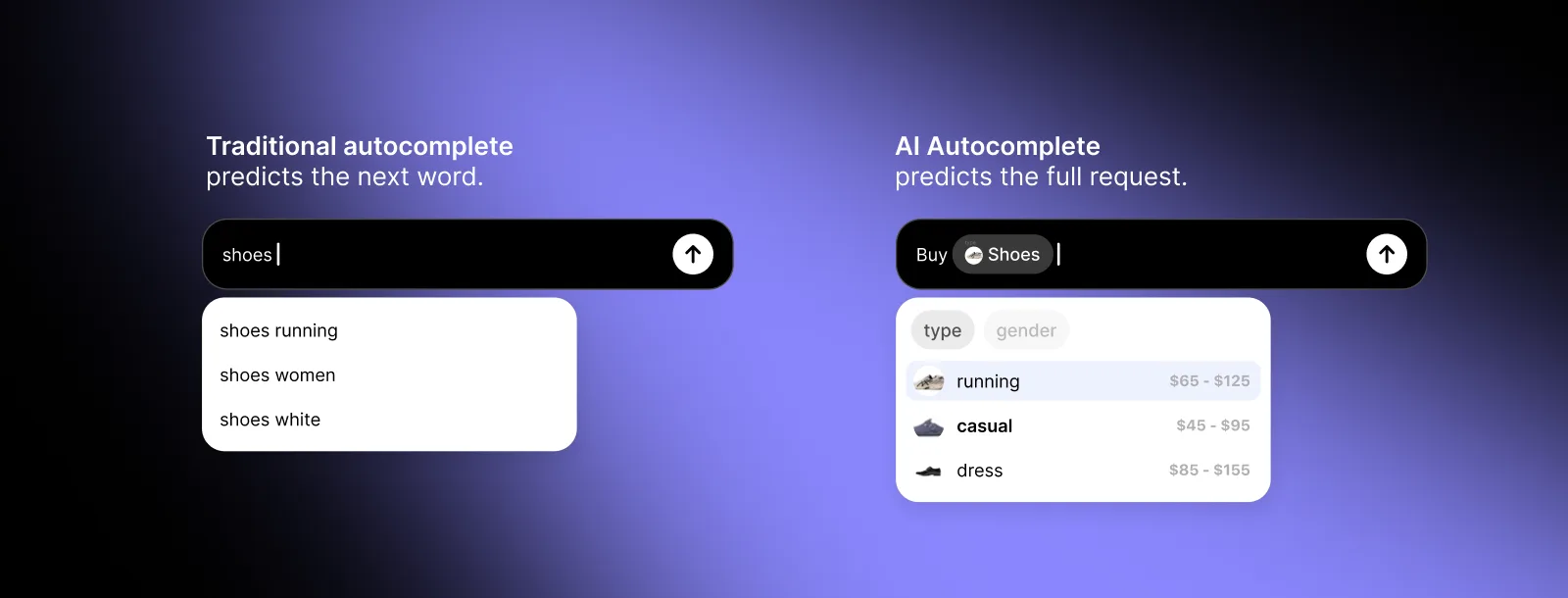
How Algolia and Elasticsearch autocomplete work
Algolia and Elasticsearch autocomplete compare what the user types with indexed content and historical searches.
User types → the system finds matching keywords → it predicts the next phrase
The result is usually a slightly longer version of what the user already typed.
How AI Autocomplete works
AI Autocomplete uses the user's real-time intent and what the product can do.
User types → AI Autocomplete understands the request → it helps the user add the missing details
The result is a much richer request that the product can act on.
How they work together
AI Autocomplete does not replace Algolia or Elasticsearch. It sits one step before them. The flow is simple:
- The user starts typing "running shoes".
- AI Autocomplete helps them complete the full request with size, use case, budget, and other relevant details.
- The richer query and filters are passed into the existing Algolia or Elasticsearch search call.
- Algolia or Elasticsearch retrieves and ranks the results as usual.
User types → AI Autocomplete completes the request → Algolia or Elasticsearch returns the results
Your index, search API, and ranking logic stay the same. AI Autocomplete simply improves what goes into them, and the integration guide walks through the setup step by step.
The result
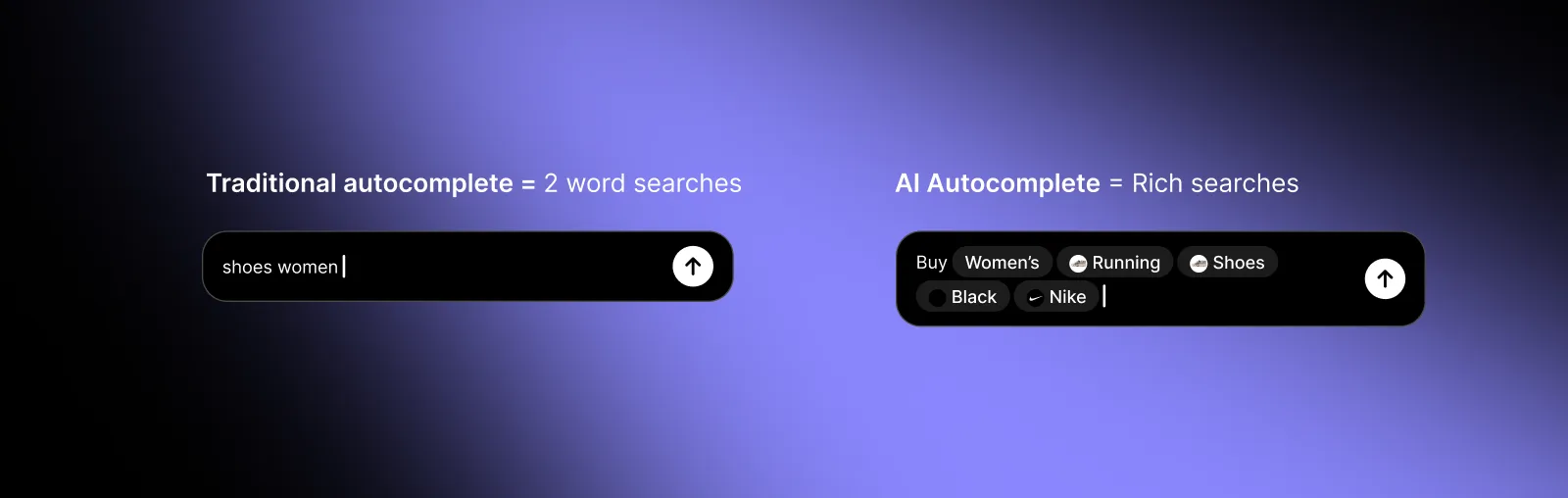
Richer searches
Most users know more about what they want than they put into a two or three word search. AI Autocomplete helps pull those details forward before the search runs.
Instead of "black dress", Algolia or Elasticsearch can receive:
"black midi dress for a summer wedding, size 6, under $200, available by Friday"
A faster user experience
A richer first query means fewer searches, fewer filters, and less back and forth. Users get closer to the right result immediately.
Better results from the same search backend
Algolia and Elasticsearch can only rank the query they receive. AI Autocomplete gives them a much richer query without changing the search backend.
Same search engine. Richer query. Better results.
The simple summary
Algolia and Elasticsearch autocomplete predict the next keyword. AI Autocomplete helps users complete the full request.
AI Autocomplete improves the query before submit. Algolia or Elasticsearch finds the results after submit.
Key takeaways
- Algolia and Elasticsearch provide traditional autocomplete. It predicts the next keyword using indexed content and historical searches.
- AI Autocomplete helps users complete the full request. It uses their real-time intent and what the product can do.
- You can use both together. AI Autocomplete completes the request before submit. Algolia or Elasticsearch retrieves and ranks the results after submit.
- Nothing in the existing search backend needs to change. The index, API, and ranking logic stay the same.
- The result is a much richer query. That creates richer searches, a faster user experience, and better results.
Frequently asked questions
What is the difference between AI Autocomplete and Algolia or Elasticsearch autocomplete?
Algolia and Elasticsearch autocomplete predict the next keyword using indexed content and historical searches. AI Autocomplete helps users complete the full request based on their real-time intent and what the product can do.
Does AI Autocomplete replace Algolia or Elasticsearch?
No. You can use AI Autocomplete with your existing Algolia or Elasticsearch backend. AI Autocomplete completes the request before submit. Algolia or Elasticsearch retrieves and ranks the results after submit.
How do AI Autocomplete and Algolia or Elasticsearch work together?
AI Autocomplete turns a vague search into a much richer request, then passes that request and its filters into the existing Algolia or Elasticsearch search call. Your index, search API, and ranking logic stay the same.
Which autocomplete should I use?
Use Algolia or Elasticsearch autocomplete when you want to predict the next keyword. Use AI Autocomplete when you want to help users complete the full request. For the strongest experience, use both.
What is the main benefit of adding AI Autocomplete?
AI Autocomplete gives your existing search engine a much richer query. That creates richer searches, a faster user experience, and better results without replacing the search backend.
Give your search backend a richer query
Keep Algolia or Elasticsearch doing what they do best. Add the intent layer in front, and every search they receive gets more specific, more structured, and easier to rank.
Try it at AI-Autocomplete.com